Fen Orc
  • Home
  • THE YOKAI HACK
  • The Magus Hack
    • Magus Corrections
    • Magus Magic
    • New Virtues
    • Wizard Sport
  • The Vampyre Hack
    • Blood Hack >
      • Nights of Fire
  • Forge Out of Chaos
    • Rules
    • House Rules >
      • House Combat Rules
      • Quick NPC Magic
    • Monsters
    • Scenarios >
      • Competition
  • Top Secret
  • OSR
    • Dragonslayer >
      • Dragonslayer Feats
      • Death in Dragonslayer
      • Psionics >
        • Psionic Monsters
      • New Class: Detective
      • Pooka (Swamp Goblin)
      • Nandie (Neanderthal)
      • The Gods
    • White Box >
      • House Rules >
        • Death & Dismemberment
        • Trauma & Derangement
        • City Downtime
        • Combat Tactics
        • Feats
        • Psionics
      • Character Classes >
        • Assassins
        • Barbarians
        • Demonists
        • Detectives
        • Druid Spells
        • Elves
        • Familiars
        • Fighter-Thieves
        • Half-Orcs
        • Houris
        • Illusionists
        • Necromancers
        • Rangers
        • War Smiths
      • Campaign >
        • Merkabar, City of Paradises >
          • Clans of Danaan
          • The Millennium War
          • Medusian Culture
          • Swamp Elf Culture
        • Danaan Clerics
        • Ellyon
        • Half-Ghouls
        • Living Armour
        • Medusians
        • Street Mages
        • Swamp Elves
        • Magic Items
        • Monsters >
          • Faerie Monsters
          • Psionic Monsters
          • Stonehell Monsters
  • Home
  • THE YOKAI HACK
  • The Magus Hack
    • Magus Corrections
    • Magus Magic
    • New Virtues
    • Wizard Sport
  • The Vampyre Hack
    • Blood Hack >
      • Nights of Fire
  • Forge Out of Chaos
    • Rules
    • House Rules >
      • House Combat Rules
      • Quick NPC Magic
    • Monsters
    • Scenarios >
      • Competition
  • Top Secret
  • OSR
    • Dragonslayer >
      • Dragonslayer Feats
      • Death in Dragonslayer
      • Psionics >
        • Psionic Monsters
      • New Class: Detective
      • Pooka (Swamp Goblin)
      • Nandie (Neanderthal)
      • The Gods
    • White Box >
      • House Rules >
        • Death & Dismemberment
        • Trauma & Derangement
        • City Downtime
        • Combat Tactics
        • Feats
        • Psionics
      • Character Classes >
        • Assassins
        • Barbarians
        • Demonists
        • Detectives
        • Druid Spells
        • Elves
        • Familiars
        • Fighter-Thieves
        • Half-Orcs
        • Houris
        • Illusionists
        • Necromancers
        • Rangers
        • War Smiths
      • Campaign >
        • Merkabar, City of Paradises >
          • Clans of Danaan
          • The Millennium War
          • Medusian Culture
          • Swamp Elf Culture
        • Danaan Clerics
        • Ellyon
        • Half-Ghouls
        • Living Armour
        • Medusians
        • Street Mages
        • Swamp Elves
        • Magic Items
        • Monsters >
          • Faerie Monsters
          • Psionic Monsters
          • Stonehell Monsters

RELIGION, FAITH & THE GODS


KOSTONHIM

Picture
Dwarvish God of Immemorial Grievance
Lawful Neutral
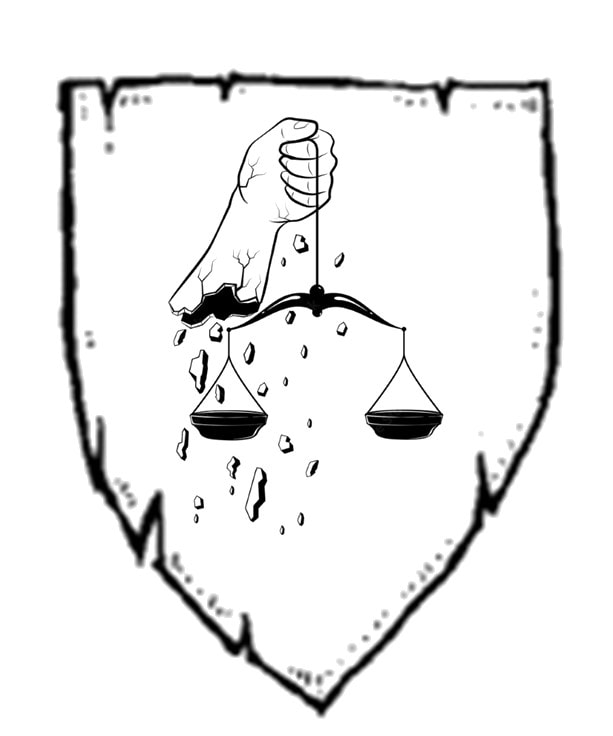
​Symbol: A decaying hand holding up a pair of balanced scales

Kostonhim is one of the few Dwarvish gods known outside of the Dwarrow community. He is a Lawful god of justice, which takes the form of long running feud and grievance - the way Dwarves like it.
Only Dwarves can be Clerics (Kostaja) of Kostonhim, but they appoint deputies of other races to help them pursue their grievances. 
A Cleric of Kostonhim collects grievances from the community, gaining a new set of grievances when they go up a level equal to the new level. Old grievances are considered more pressing than recent ones and grievances held by Dwarves are more pressing than those held by Ulkomaals (non-Dwarves).
Non-Dwarves sometimes approach the cult of Kostonhim looking for redress, especially if the ordinary authorities have let them down. The tradition is to carve your grievance onto a stone and hand it to the Cleric. These 'grievance stones' (valikivi) are carried and traded by Clerics, but the layperson is expected to set aside their grievance now that it has been offered up to Kostonhim. It may not occur until after they are long dead, but Kostonhim will ensure their grievance is carried out - if only to their enemy's distant descendants!

SAINT SLADE

Picture
Demi-God of Penitence
Lawful Neutral
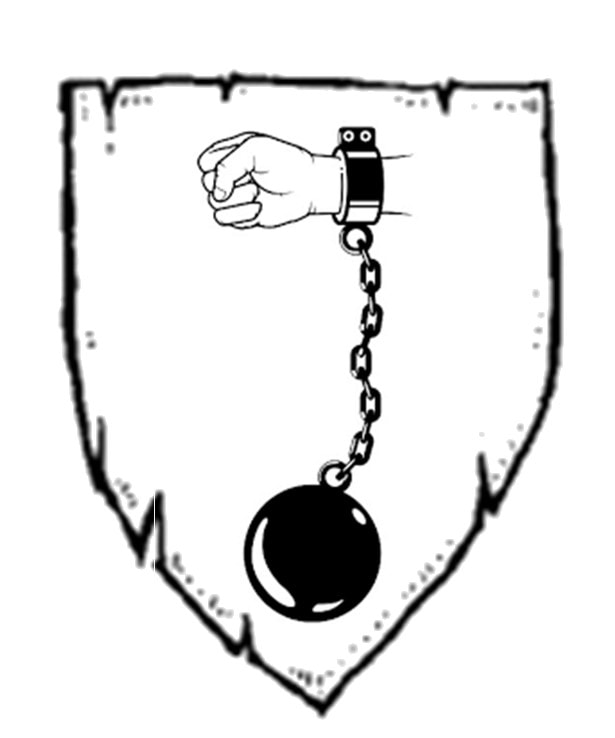
Symbol: a hand manacles to a ball and chain

St Slade is one of the lesser Futurus deities in the service of St Ygg. St Slade is the god of pertinence, punishment, and repentance. St Slade is often depicted accompanied by two lesser angels: St Norman (demi-god of guilt and prisons) and St Stanley (demi-god of acquittal and parole).
Clerics and Monks of St Slade preside over courts, sentencing, and prisons.  If not actually judge or executioner, they are usually present as clerks of court or goalers.
A branch of the order known (for forgotten reasons) as 'Fletchers,' function as parole officers for convicts. These convicts are offered parole or amnesty if they undertake dangerous missions on behalf of the state. A Fletcher might accompany such a group of convicts to ensure they carry out their mission and don't perform more crimes.

Some Fletchers are assigned a youthful convict to rehabilitate. It's not unknown for Fletchers to take such characters down a dungeon such as Barrowmaze as part of a 'character building' project!
Powered by Create your own unique website with customizable templates.